
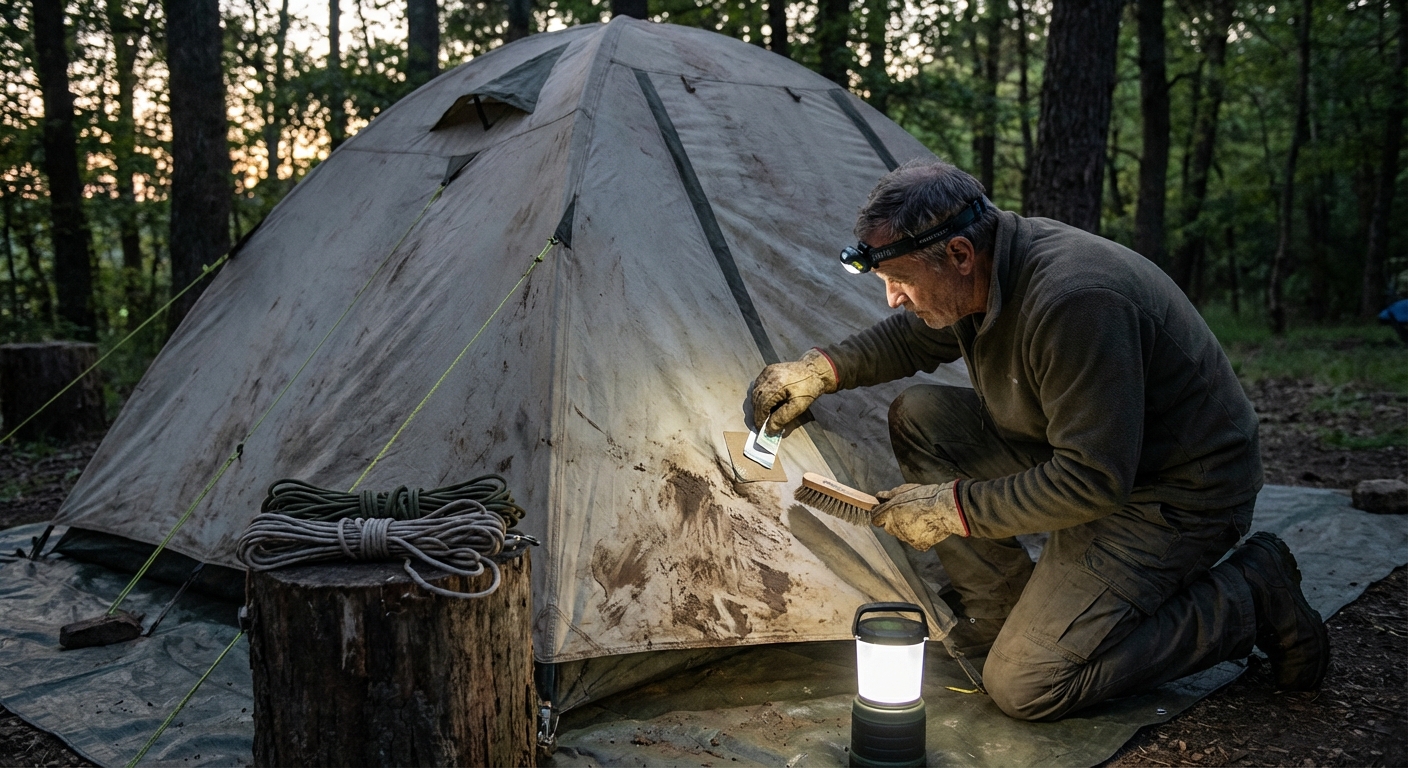
Most tents don’t fail because of some factory defect. They fail because we stuff them away wet, drag them across rock, cook under the fly, or yard on zippers after a week of grit. Treat your shelter like a consumable and that’s exactly what it becomes.
Gear Doesn’t Die—We Kill It
The good news: a handful of simple, repeatable habits can add seasons to any tent or tarp, from clearance-rack nylon to top-shelf Dyneema.
Habit 1: Smarter Site Selection (The Free Upgrade)
You can’t control weather, but you can control where you pitch.
Avoid the Obvious Mistakes
- Depressions: They look flat and comfy until they’re a bathtub.
- Dust bowls: Wind-scoured flats that turn your tent into a sandblaster.
- Under widowmakers: Dead branches and sketchy snags will eventually come down.
Aim For:
- Gentle micro-slopes: Just enough to shed water, not enough to slide.
- Natural wind breaks: Low shrubs, rock outcrops, dense but healthy trees.
- Soft but not spongy ground: Grass, pine duff, or firm soil.
Durability Impact: Less standing water, less abrasion, less wind shock. Your floor and poles take fewer hits over time.
Habit 2: Treat Floors Like the Weak Link (Because They Are)
Tent floors are often the first part to fail: abrasion from rock, pressure from knees or elbows, and hydrostatic stress from pooled water.
Use the Right Ground Protection
- Heavy fabrics (40D+): Short trips? You can often skip a footprint if you’re careful.
- Mid/UL floors (15–30D): Use polycro or Tyvek as a groundsheet.
- Ultralight, cheap, clear plastic
- Great for thru-hikes and UL setups
- Replace when torn; don’t baby it
- Tough, slightly heavier
- Ideal for rougher terrain and budget tents
Polycro:
Tyvek:
Inside the Tent
- No cooking inside; spatter and heat don’t mix with coated fabrics.
- Kneel, don’t grind: Use a foam pad or sit pad when kneeling on rocky ground.
Durability Impact: A $12 sheet of plastic can buy you years more life from a $400 shelter.
Habit 3: Zipper Care Like a Pro
Zippers quietly fail more often than fabric does, especially in dusty or sandy environments.
Prevent Grit Damage
- Tap or brush off dust before zipping.
- Don’t slam doors; guide the slider in a straight line.
- Keep fabric tension low at the zipper line; over-tension pulls teeth out of alignment.
Field Fixes
- If a zipper starts to split, slow down immediately—forcing it shreds it faster.
- Clean the teeth with a soft brush or a damp cloth.
- Lightly pinch the slider with pliers if it has spread (carefully—too much and it’s done).
Durability Impact: Respect the zippers and your tent stays sealed in storms instead of flapping open at 3 a.m.
Habit 4: Pitch With Even Tension, Not Brute Force
Over-tightening guylines and corner straps is a fast way to blow seams and stress fabrics.
Practical Pitch Discipline
- Stake corners at a 45° angle away from the tent.
- Tension each corner gradually. Walk the loop twice instead of cranking one point.
- Use all critical guy-outs (especially on the windward side) in bad weather.
Wind Management
- Low and narrow into the wind.
- Don’t leave big vertical panels for gusts to hammer.
- Add natural anchors (rocks, logs) to share the load.
Durability Impact: Seam tape and stitching last far longer when you let the structure flex instead of playing tug-of-war with the guylines.
Habit 5: Manage UV and Moisture When You’re Off Trail
The two big long-term shelter killers are UV exposure and moisture left in storage.
On Trail
- Don’t leave your tent pitched in full sun all day if you’re basecamping and out hiking.
- Dry in morning or late-afternoon sun, not at high noon.
At Home
- Always air-dry completely: hang the tent open until every seam and corner is dry.
- Store in a large, breathable sack, not its tiny stuff sack.
- Avoid damp garages and basements; mildew and humidity eat PU and seam tape.
Durability Impact: Avoiding a few long, hot sun-bake days and one moldy garage season can literally double the life of a tent.
Habit 6: Clean, Don’t Scrub
Mud, body oils, and fine grit slowly break down coatings.
Post-Trip Cleaning
- Shake out dirt and loose debris.
- Spot clean with lukewarm water and a soft sponge.
- Use a tent-specific cleaner if needed; avoid household detergents—they strip coatings.
Deep Clean (Occasionally)
- Fill a tub with cool to lukewarm water, add cleaner per instructions.
- Soak, gently agitate, then rinse thoroughly.
- Dry completely before storage.
Durability Impact: Coatings stay flexible and waterproof longer, avoiding the dreaded sticky or flaky fly syndrome.
Habit 7: Respect the Pole Set
Poles are compact, high-stress parts that take a beating when mishandled.
In the Field
- Assemble poles section by section, ensuring each ferrule seats fully.
- Don’t whip or snap poles to extend them; micro-cracks form over time.
- Keep poles out of the doorway path where you or partners will step on them.
After the Trip
- Wipe dust and grit off with a damp cloth.
- Let wet poles dry to prevent corrosion on metal parts.
Durability Impact: Fewer cracked segments, fewer broken hubs, and a structure that still holds shape in high winds.
Habit 8: Build a Minimal, Effective Repair Kit
Carrying a smart repair kit isn’t just about saving the trip—it protects the long-term integrity of the shelter.
Core Items (Add to Every Pack)
- Tenacious Tape or Gear Aid patches (for fly and floor)
- 1 pole splint sized for your tent’s poles
- 2–3 spare stakes
- 6–10 ft (2–3 m) of extra guyline
- Small tube of seam sealer (generally at home, but a mini tube on long trips)
Using It Wisely
- Fix small holes and abrasions immediately before they grow.
- Reinforce stressed guy-out patches with tape if a storm is incoming.
- Splint a compromised pole as soon as you notice a bend or crack.
Durability Impact: Problems stay small; a 1 cm tear doesn’t become a 30 cm disaster.
Habit 9: Know When to Reseal and Reproof
Even with perfect care, coatings and seam tape eventually age out.
Signs Your Shelter Needs Work
- Fly wets out quickly instead of beading water.
- Floor begins to seep when you kneel or sit on wet ground.
- Seam tape peels, cracks, or gets gummy.
Fixes
- Use a DWR restorer on the fly; it won’t fix delamination, but it will improve beading.
- Reseal seams with appropriate sealant (silicone-based for silnylon, PU-based for PU fabrics).
- For heavily degraded PU coatings, it may be cheaper and more effective to replace the shelter.
Durability Impact: Timely resealing can extend a shelter’s effective life by several years, especially floors.
Habit 10: Treat Shelter Choice as a System, Not a Single Item
The right habits + materials + design make the difference.
Match Shelter to Behavior
- Rough user, minimal care? Choose thicker fabrics and simpler designs.
- Careful user, disciplined with site selection? You can safely go lighter.
Examples
- Weekend Hiker: Midweight tent with 20–30D floor, basic groundsheet, standard repair kit.
- Thru-Hiker: UL trekking-pole tent or DCF shelter, religious with groundsheets and site selection, robust repair kit.
- Shoulder-Season Hiker: Strong pole structure and better fabrics; extra attention to storm pitches and guy-outs.
Bottom Line: Habits Beat Hype
You don’t need to baby your tent, but you do need to respect it.
If you:
- Pick smart sites,
- Protect the floor,
- Pitch with even tension,
- Keep zippers clean,
- Dry and store it properly,
then even a midrange shelter will give you years of reliable service. Ignore those basics, and no amount of money or fancy fabric will save you from waking up soaked and cursing at 3 a.m.
Shelter discipline isn’t glamorous, but it’s what separates the gear that survives seasons from the gear that becomes landfill after a year.