
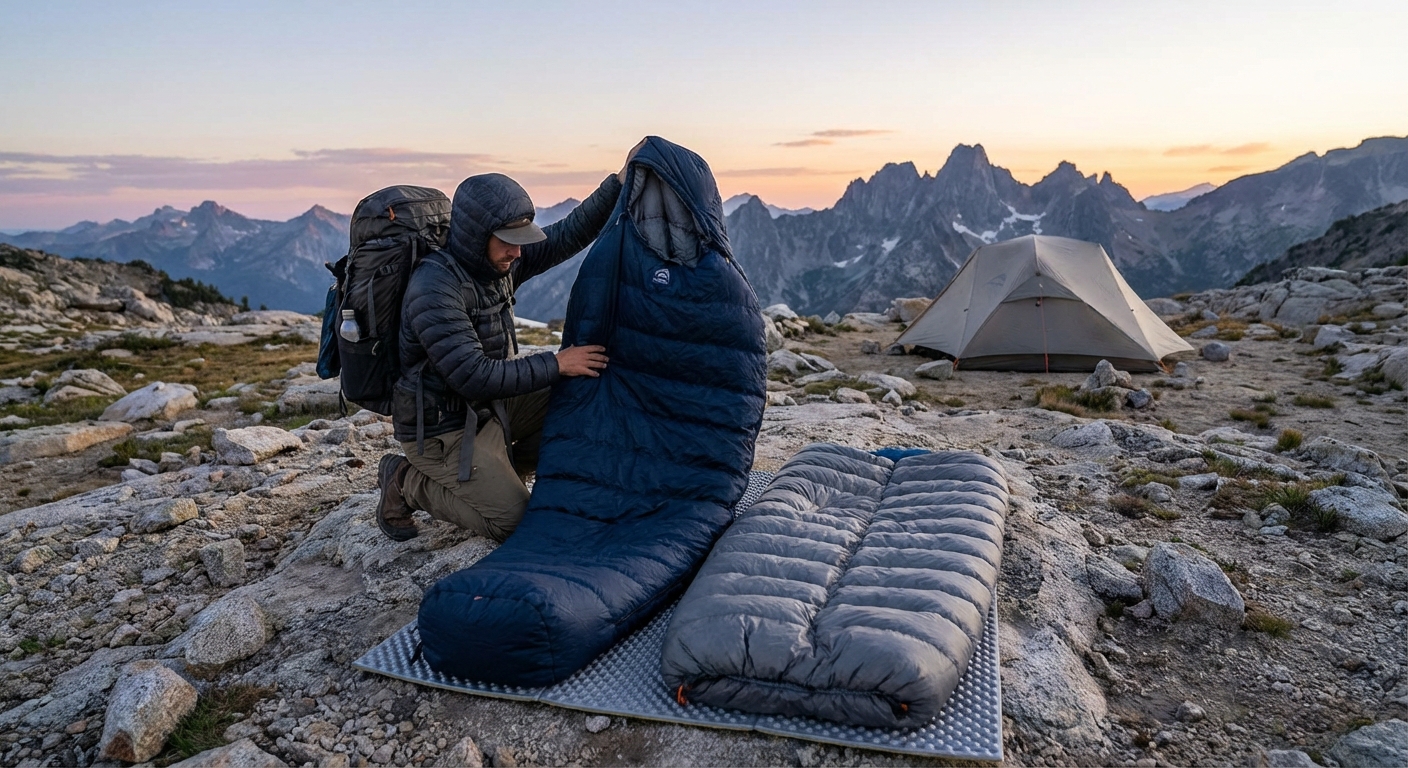
There’s a lot of noise online about quilts being the new magic bullet and sleeping bags being outdated. The truth is less glamorous: both work, and each is better in specific conditions and for specific hikers.
Stop Guessing: Pick the Right Tool for How You Hike
This is a blunt, field‑driven comparison to help you decide where to put your money.
How Each System Actually Works
Sleeping Bags
Classic mummy or semi‑rectangular design:
- Full wrap‑around insulation
- Hood and draft collar to seal heat
- Zipper access (side or center)
You roll inside the bag; insulation stays wrapped around you.
Quilts
Think of a quilt as a hoodless, backless sleeping bag with straps.
- No insulation on the underside (the pad does that job)
- Open back with pad attachment straps
- Footbox is sewn or drawstring‑closed
You roll with the quilt while it’s strapped to the pad.
Both can keep you warm if used correctly. The differences show up in weight, comfort style, draft resistance, and learning curve.
Weight and Pack Space: Where Quilts Win
Weight Comparison (20°F Class)
Sleeping bag (20°F down):
- Typical weight: 32–40 oz (900–1150 g)
- Examples: NEMO Riff 15 (~46 oz), REI Magma 15 (~28 oz, lighter but pricey)
- Typical weight: 20–26 oz (570–740 g)
- Examples: Enlightened Equipment Revelation 20 (~23–26 oz), Hammock Gear Economy 20 (~25–28 oz)
Quilt (20°F down):
Quilts usually cut 6–16 oz compared to a similar‑quality bag. That’s real weight, not marketing fluff.
They also compress smaller because there’s simply less material.
Verdict: For weight and packability, quilts win.
Warmth and Draft Resistance: Bags Have the Edge
On paper, equally rated bags and quilts should be similar. In practice, warmth depends heavily on draft control and fit.
Where Bags Shine
- Less fiddling. Zip, cinch hood, done.
- Integrated hood. Protects your head and neck without relying on hats or jacket hoods.
- Better in wind. Fewer opportunities for cold air to sneak in.
A snug mummy bag (especially from conservative brands like Western Mountaineering or Feathered Friends) can exceed its rating if you manage moisture and eat well.
Where Quilts Struggle
- Drafts. Rolling, side‑sleeping, or flailing around can open gaps.
- Head coverage. You must manage hat/hood layering.
- Setup. Straps must be dialed—too loose or tight and you lose efficiency.
A quilt can be just as warm, but only if you know how to use it.
Verdict: For cold, windy, or high‑consequence trips, bags are safer and more forgiving.
Comfort and Sleeping Style: Know Yourself
You’ll Probably Prefer a Bag If:
- You’re a cold sleeper
- You camp in shoulder seasons a lot
- You like to burrow into a hood and shut the world out
- You don’t want to think much about setup
You’ll Probably Prefer a Quilt If:
- You toss and turn or sleep on your side
- You run hot and often overheat in mummy bags
- You hike in milder 3‑season conditions
- You care more about pack weight than a plug‑and‑play experience
Many side‑sleepers love quilts because they can move naturally without fighting a mummy hood. But if you’re the type to wake at every draft, a quilt can drive you nuts.
Price and Value: It Depends Where You Shop
Budget Range
- Sleeping bags: Synthetic 20–30°F bags start ~$120–$200 (Kelty, Marmot, REI Co‑op basics)
- Quilts: True budget quilts are rarer; Hammock Gear Economy line lands ~$230–$280
If you’re really scraping by, synthetic bags are cheaper than decent quilts.
Mid-Range
- Down bags: REI Magma, NEMO Disco/Riff – $300–$450
- Down quilts: Enlightened Equipment Revelation, UGQ Bandit – $300–$450
Here, pricing is similar. Your choice is about style, not dollars.
Premium
- Bags: Western Mountaineering, Feathered Friends – $500–$800
- Quilts: Katabatic Gear, Nunatak – $450–$700
At the high end, both are painful but built to last a decade or more with care.
Verdict: On a strict budget, bags win. In mid‑range and up, it’s a draw.
Durability and Failure Modes
What Fails on Bags
- Zippers: Snag, split teeth, slider wear
- Hood cinches and cords: Can blow out or fray
- Shell fabric: Same risk as quilts—snags, abrasion, embers
What Fails on Quilts
- Pad straps and buckles: Lose, break, or tangle
- Drawcords on footbox: Can slip or fail in cheap builds
- Same shell fabric issues as bags
In terms of long‑term life, quality down insulation (in either format) can last 10+ years of regular use if you don’t abuse it. The weak links are usually zippers, buckles, and your own poor storage habits.
Verdict: Durability is mostly about construction quality and care, not format.
Moisture Management: Format Matters Less Than Discipline
Down doesn’t like water, whether it’s in a quilt or bag. Synthetic shrugs off some wet, but not all.
What matters more:
- Do you store your insulation in a true dry bag or pack liner?
- Do you air out your bag/quilt in camp when conditions allow?
- Do you avoid breathing into your insulation and soaking the hood or top baffles?
Quilts get a small advantage because they’re easier to open and air out daily. Bags get an advantage because the hood keeps your breath away from main body baffles.
Verdict: Call it a draw; your habits decide.
Who Should Choose a Bag
Pick a sleeping bag if:
- You’re gearing up for your first real backpacking setup
- You regularly see temps below freezing
- You tend to get cold easily or wake from minor drafts
- You’re headed into wind‑exposed terrain (alpine, ridgelines)
- You value simplicity over optimization
- 20°F down mummy bag
- Weight around 2–2.5 lb
- R 3–4 insulated pad paired with it
You’ll likely want something like:
Brands that rate conservatively and build tough: Western Mountaineering, Feathered Friends, some REI Magma models.
Who Should Choose a Quilt
Pick a quilt if:
- You’re planning a thru‑hike or multi‑week trip where weight savings add up
- You mostly hike in 3‑season conditions with strategic shoulder‑season pushes
- You sleep hot or hate feeling confined
- You’re willing to learn how to dial in pad straps and layers
- 20–30°F down quilt, regular width or wide if you toss and turn
- Weight around 20–26 oz
- Good R 3+ insulated pad, possibly with a foam underlay in colder weather
You’re probably looking for:
Brands with proven field reputations: Enlightened Equipment, Katabatic Gear, Hammock Gear, UGQ.
Hybrid Approach: Why Many Experienced Hikers Own Both
Serious backpackers often run two setups:
- Cold/wet/higher-risk trips: A trusted mummy bag with a high R‑value pad.
- Mild 3‑season and long mileage trips: A lighter quilt system.
They don’t debate the internet; they choose the right tool and go hike.
If you’re on a budget and can only choose one, be honest:
- More alpine, shoulder season, and uncertainty? Get the bag.
- More summer, long trails, and predictable conditions? Get the quilt.
Bottom Line
Ignore the hype from both camps. A sleeping bag is a forgiving workhorse. A quilt is a precise, efficient tool.
Choose based on how cold it really gets, how you actually sleep, and how much fiddling you’re willing to do at the end of a long day. That’s the only comparison that matters on trail.