
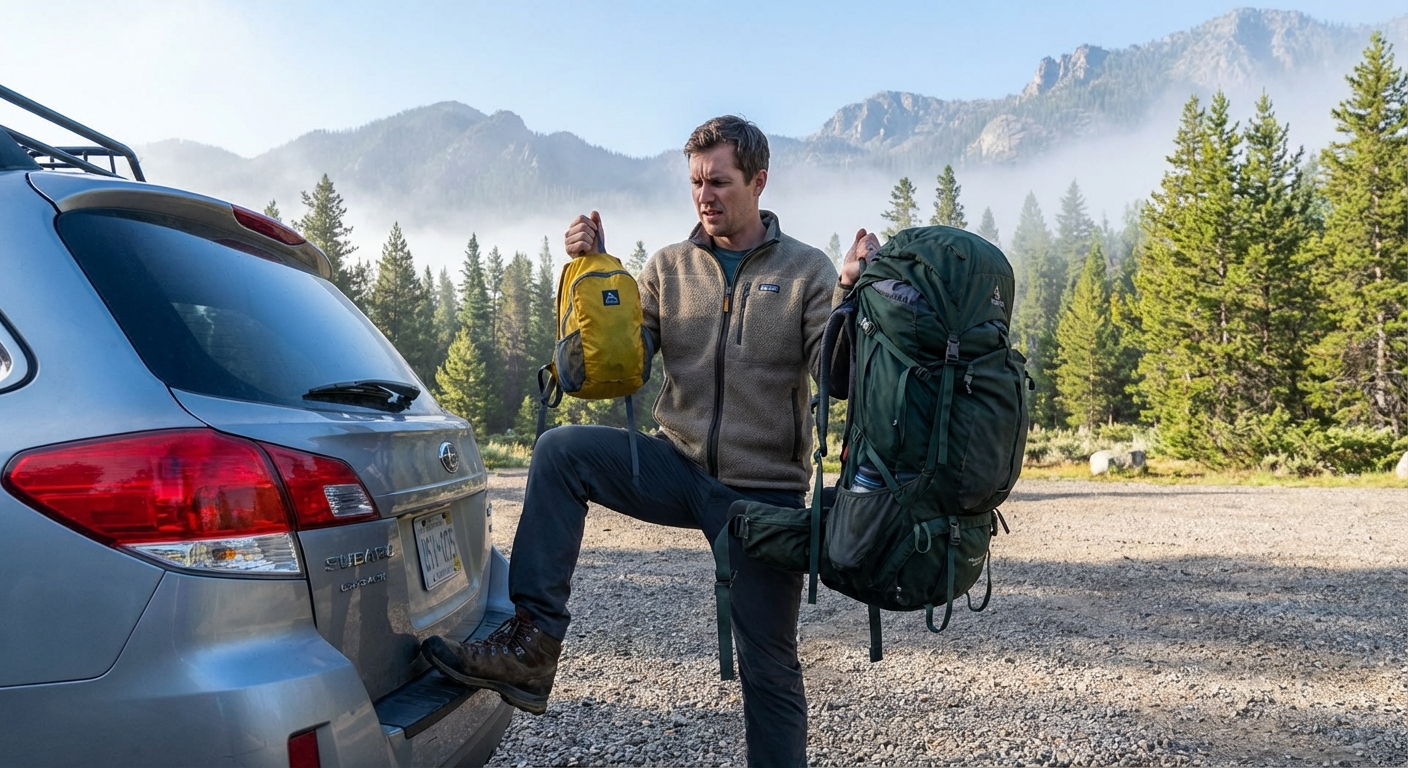
Some hikers swear by frameless ultralight packs that barely tip the scale. Others drag bombproof, 5-pound rigs through everything and won’t switch.
Pick the Right Tool, Not the Trend
Both camps are right—for themselves.
This guide breaks down ultralight vs workhorse backpacks using real-world trade-offs: weight, durability, comfort, and cost. The goal isn’t to crown a winner; it’s to match your pack to the miles and abuse you actually dish out.
UltraLight Packs: Cutting Ounces, Raising Demands
What we mean by ultralight (UL) here:
- Pack weight: roughly 16–32 oz (450–900 g)
- Frame: minimal or none; may use a foam pad as support
- Volume: 35–55L
- Materials: Dyneema, ultralight ripstop nylon, Ultra, or similar
Where UL Packs Shine
Dialed-in gear systems
- You already run a small, compressible sleep system - Your base weight is under ~12–15 lb
Long-distance trails
- AT, PCT, CDT, and similar routes where you’re walking more than scrambling - Repeating similar days: hike, camp, repeat
Repetitive motion, minimal abuse
- Good tread, reasonable weather windows, predictable resupply
UL Pros
- Less fatigue: Removing 2–3 pounds from your back adds up over thousands of steps.
- Faster pace, easier climbing: Less weight means easier elevation gain.
- Simpler design: Fewer zippers and straps to fail.
UL Cons
- Narrow comfort window: Packs feel best below a certain load ceiling (often 20–30 lb).
- Less padding: Unforgiving with poor packing or awkward loads.
- More fragile: Thinner fabrics and lighter hardware are less forgiving when you posthole through rock or bash through scrub.
UL Packs to Study (Not Blindly Buy)
- Gossamer Gear Mariposa – Ultralight but still comfortable with moderate loads; pockets are excellent for organization.
- ULA Ohm / Circuit – Slightly heavier side of UL, but with better durability and support for thru-hikes.
- HMG Southwest – Dyneema, water-resistant, proven on long trails and in wet climates.
Use these as templates for what works, then choose the model that fits your body and budget.
Workhorse Packs: Weight You Can Lean On
What we mean by workhorse packs:
- Pack weight: roughly 3–5+ lb (1.4–2.3+ kg)
- Frame: real framesheet and stays, or robust metal frame
- Volume: 50–75L
- Materials: 210–420D+ fabrics, reinforced bottoms, robust webbing
Where Workhorse Packs Shine
Heavy loads
- Winter trips with extra insulation and fuel - Climbing gear, ropes, snow tools, bear can + long food carries
Harsh terrain
- Scrambling, bushwhacking, scree fields, tight chimneys - Frequent contact with rock, ice, and thick brush
Mixed travel and “real world” abuse
- Travel, work, packrafting shuttles, guiding, and rescue work
Workhorse Pros
- Comfort under load: Proper frames transfer 35–50+ lb to your hips without crushing your shoulders.
- Durability: Thicker fabrics and stronger stitching handle dragging, dropping, and overstuffing.
- Forgiving: Less sensitive to imperfect packing or last-second gear choices.
Workhorse Cons
- Heavier base weight: You’ll feel those extra pounds on long climbs.
- Bulkier: Can feel like overkill on mellow trails with light loads.
- More complex: Extra pockets, zippers, and straps mean more things to break.
Workhorse Packs to Consider
- Deuter Aircontact / Futura – Very comfortable suspensions at the cost of weight.
- Gregory Baltoro / Paragon – Built to carry substantial loads with solid frames.
- Mystery Ranch (Trekking lines) – Overbuilt, but when you need to haul heavy, they deliver.
Again, these are patterns, not prescriptions.
Mixed-Use and Crossover Packs: The Middle Ground
There’s a wide middle category that isn’t truly UL or a full-on beast.
Specs:
- Pack weight: 2–3 lb (900–1350 g)
- Volume: 45–60L
- Enough frame to handle 30–35 lb, light enough for long days
Examples:
- Osprey Exos/Eja – Lighter than traditional workhorses, more forgiving than full UL rigs.
- Granite Gear Crown / Blaze series – Efficient suspension, durable enough for long trails.
These packs are ideal for:
- Hikers transitioning lighter while keeping some comfort.
- Section hikers and weekenders who still want a durable pack.
Cost Comparison: What Are You Really Paying For?
Ultralight Packs
- Materials: Expensive fabrics like Dyneema or Ultra
- Design: Stripped down; every seam considered
You’re paying more for less—less weight, fewer features.
Workhorse Packs
- Materials: Heavier but cheaper nylons, often with robust hardware
- Design: More complex suspension and features
You’re paying for comfort, adjustability, and longevity rather than gram-shaving.
If you hike just a few times a year, a $350 UL pack may not bring you much real advantage over a well-fitting $220 midweight. If you’re logging thousands of miles, dropping a couple of pounds from your pack can be worth every dollar.
Decision Points: Ask Yourself the Hard Questions
1. What’s Your Real Base Weight?
Not what you hope it will be, but what it is today.
- Under 12 lb: Ultralight or crossover packs are realistic.
- 12–18 lb: Crossover or lighter workhorse packs.
- 18+ lb: You’ll probably appreciate a sturdier suspension.
2. How Rough Are Your Trails?
- Groomed footpaths with occasional rocks: UL is viable if you pack smart.
- Rocky, brushy, off-trail: Lean toward midweight or workhorse durability.
3. What’s Your Typical Max Load?
Think walking out of town with food and water.
- Under 25 lb: UL and crossover packs should manage.
- 25–35 lb: Crossover or lighter workhorses.
- 35+ lb: Solid frame and serious padding will save you.
4. How Often Will You Use the Pack?
- Once or twice a year: A durable, midweight workhorse is usually the safest bet.
- Every month or more: Consider investing in a lighter pack if your gear supports it.
Durability Reality Check
Ultralight doesn’t mean disposable, but you need to adjust behavior:
With UL Packs:
- Don’t drag them on rock.
- Avoid overstuffing seams.
- Pad hard-edged items.
With Workhorse Packs:
- You can be less precious but not reckless.
- Regularly inspect stitching at shoulder and hip attachments.
- Clean off grime and salt so fabrics don’t wear prematurely.
Use repair tape early: small tears are easy; blown-out panels are not.
A Hybrid Strategy Many Experienced Hikers Use
A lot of long-time hikers end up with two packs:
- Light or UL pack for three-season trips with dialed-in gear and predictable conditions.
- Workhorse pack for winter, off-trail, or when hauling heavy gear.
If you’re just getting started, buy a durable midweight pack that can straddle multiple roles, then go lighter later once the rest of your system evolves.
Bottom Line: Match Pack to Purpose, Not Ego
If you mostly hike rocky, wet, unpredictable routes with a base weight north of 15 lb, forcing a fragile UL pack into that role is asking for repairs and misery.
If you’re walking long, well-traveled trails with a tight kit under 12 lb, hauling a 5 lb expedition pack is punishing yourself for no reason.
Be honest about your miles, your terrain, and your habits. Then choose the lightest pack that will survive your abuse and keep you comfortable enough to want to hike again tomorrow. That’s the real win.